Most scams are absurd – so absurd that one wonders how anyone falls for them at all; yet if no one falls for them, how do the scammers make money?
James Veitch
Many of my readers know that I volunteer with AARP as a cyber fraud specialist. I travel around the Twin Cities presenting fraud prevention to churches, community centers, senior centers, libraries — pretty much any place that will have me. For the most part, I speak to people my age and older, but nothing I present is age-dependent. Scammers use the same techniques on 18-year-olds as they do on folks well into their Social Security years. I will venture to say that scammers are probably the most non-discriminatory group of people in the world and I don’t say that as a good thing.
When I am not in front of an audience, I spend quite a bit of time each week learning about the latest scams, who they are targeting, and better ways to keep folks safe. It’s a jungle out there and the more I learn, the greater the chances are of me helping to keep folks out of trouble.
Fun fact. This is not my first rodeo when it comes to cyber fraud articles. To see a video of me in action, check out last year’s Cyber Fraud: Protect, Recognize, and Recover.

I am also the on-call scam fixit guy for my friends, family, and acquaintances. Whether it’s removing a nasty browser extension or doing a complete Windows reinstall, I have been called on to find and remove all sorts of viruses, spyware, and malware. I am proud to say that I haven’t encountered a challenge I could not conquer, but the scammers are constantly getting more clever and there may come a day when their ability to infect surpasses my skills to seek out and destroy.
Thankfully, today is not that day.
Case in Point
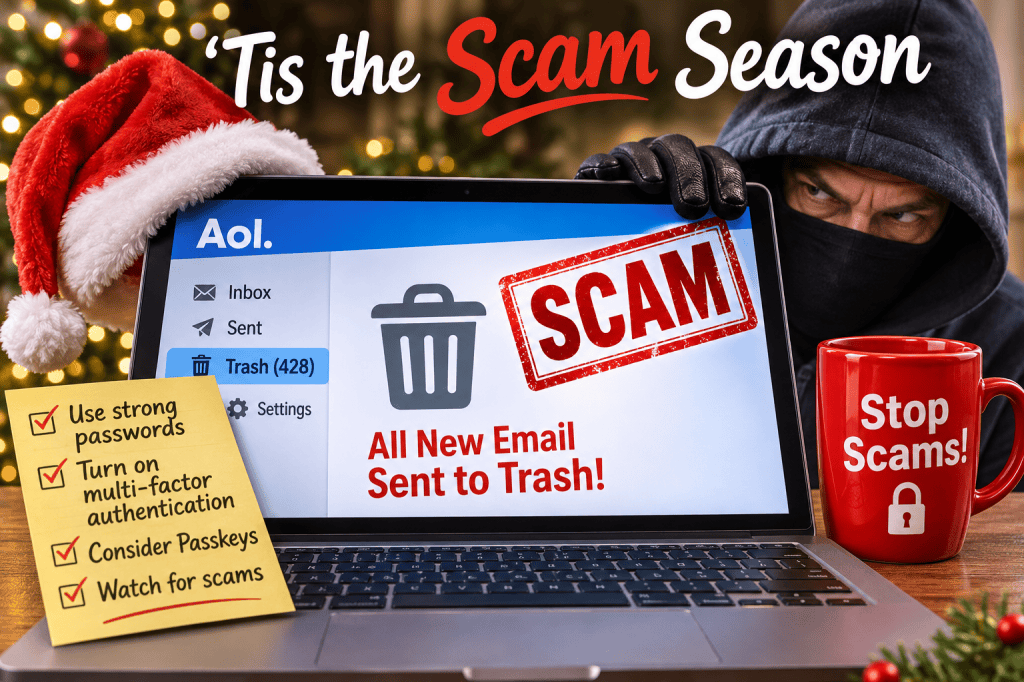
Last Tuesday, a friend brought her iPhone to me to look at a problem with her AOL email. She stopped receiving new emails and after some poking around, my friend discovered that they were all being sent to the Trash folder. This occurred in both the built-in iPhone email program as well as the AOL app. After some discussion, I learned that it was also happening on her iPad.
Armed with the knowledge that the problem was device and application independent, I asked for her AOL credentials and logged into the account from my PC. I opened her email settings and quickly discovered four filters that routed every incoming message to the Trash folder. I removed the filters and everything went back to normal. I also changed her AOL password and tightened up her security settings to help prevent this from happening again.
To the best of my knowledge, this is what occurred. Someone got access to her AOL login name and password, added the nefarious filters, and then used her account to attempt password changes on other accounts — think financial and health. Since the password change requests were immediately going to the Trash folder, the scammers could perform their dirty deeds without immediately being noticed.
How they got her AOL credentials is unknown. I learned a long time ago that after something goes awry, people have a hard time remembering everything they did on their devices. They are also very hesitant to admit to being fooled by a scammer.
My guess is that she found herself on a fraudulent webpage that prompted her to provide her AOL credentials. This is very common with party invitation scams. Once they had her credentials, they logged into the account, added the filters, and began harvesting data as fast as they could.

Unfortunately, it may take a while to realize the full extent of the scammer’s actions. I told my friend to invest some time in additional password changes, adding multi-factor authentication, switching to Passkeys whenever possible, double-checking recovery email addresses and telephone numbers, and keeping a close watch on all her digital services. Since she only owns an iPad and iPhone, I was spared the work of a virus scan and heaven forbid, a software reinstall. Rooting out malware on a Windows PC adds an extra layer of work that I thankfully did not have to do.
Enough About Me
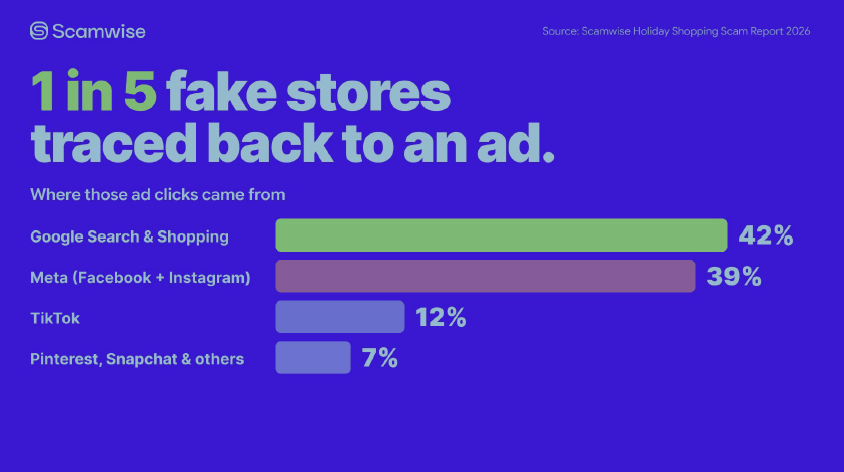
As we approach Thanksgiving and the holiday shopping blitz, the scammers are out in full force. They prey upon our desire for a bargain and offer deals so enticing that we let our guards down. Using AI, they whip out realistic-looking web pages that go from idea to fully hosted in as little as a few hours. They are also promoted on legitimate platforms we’ve grown to trust.
According to Reuters:
Meta (i.e. Facebook) projected 10% of its 2024 revenue would come from ads for scams and banned goods. The social media giant internally estimates that its platforms show users 15 billion scam ads a day.
The same goes for major commerce platforms such as Amazon where some of their independent vendors are actually scammers. The hucksters take your money and either ship products that fall short of the advertised specifications or ship nothing at all. Amazon will take them down after it receives enough complaints, but the scammers quickly pop up again under new names complete with thousands of phony reviews.
Fun fact: It’s not just scam websites we need to watch out for. According to Capital One Shopping, 82% of consumers encounter fake reviews at least once over a 12-month period. Its research estimates that fake reviews cost consumers worldwide $770.4 billion in 2025, a figure projected to reach $1.07 trillion by 2030. Even Amazon, which invests heavily in detecting fraudulent reviews, reported blocking more than 275 million suspected fake reviews in 2024.
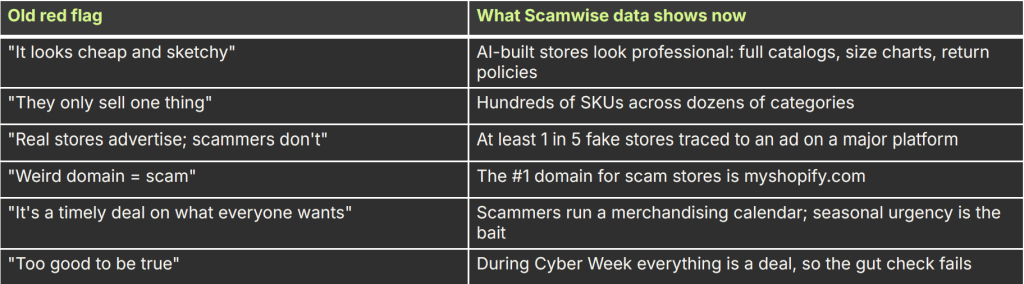
The sad truth is that it is becoming exceedingly difficult to spot a fraudulent ad, review, or website. Scam sites are built on legitimate hosting and domain registration companies such as GoDaddy, they use valid security certificates, and are accessed via HTTPS. Our web browser tells us that the connection is secure so we expect the company to be legitimate.
The old rules no longer apply in today’s modern world of fraud.
All is Not Lost
Once a month, my AARP fraud team meets to discuss the latest developments in the world of scams. We often invite guest speakers and this month we invited Patrick Coughlin to join us. Patrick is the co-founder and CEO of Savi Security and one of the creators of Scamwise.
Scamwise offers a suite of products that allow folks to recognize and avoid scams. As a webpage, scamwise.com allows users to analyze images, text, and links. It then provides a detailed analysis of whether the image, link, or text is a scam or not.
For example, I uploaded an image of the above Punchbowl party invitation and received the following analysis:
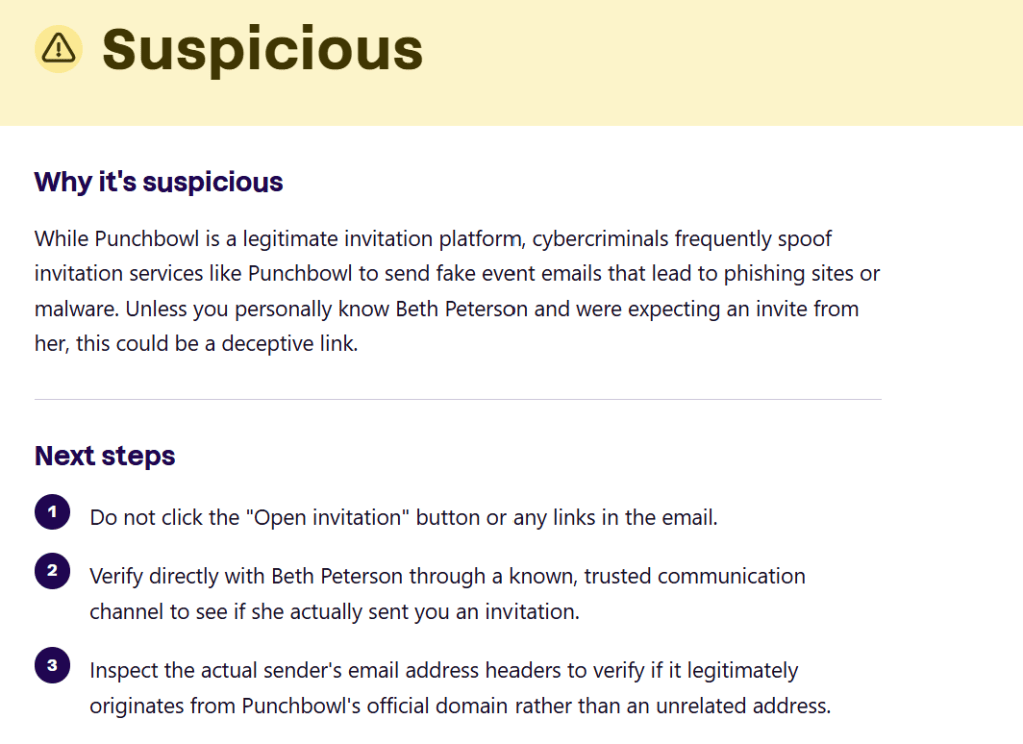
I subsequently submitted a variety of images, and Scamwise correctly identified each one.
As an iPhone or Android app, Scamwise performs similar fraud analysis on emails, text messages, voicemails, and web links. It can also be added to a live telephone call, where it analyzes the conversation in real time and provides an assessment of whether the call may be a scam. The goal is to quickly spot and stop scammers, no matter how they try to reach you.
Lastly, when installed as a Chrome extension, Scamwise warns you the moment you land on a scam site or fake store. It does this before you buy, sign in, or share any personal information. This may put a stop to the effectiveness of party invitation scams where you don’t realize you are being scammed until the hook has been set.
After installing the extension, I went to a known scam website and within seconds the following warning message appeared from Scamwise. It’s not as if I would ever want a football helmet grill (especially one that is clearly an AI image), but if I did, I know not to purchase one from these crooks.
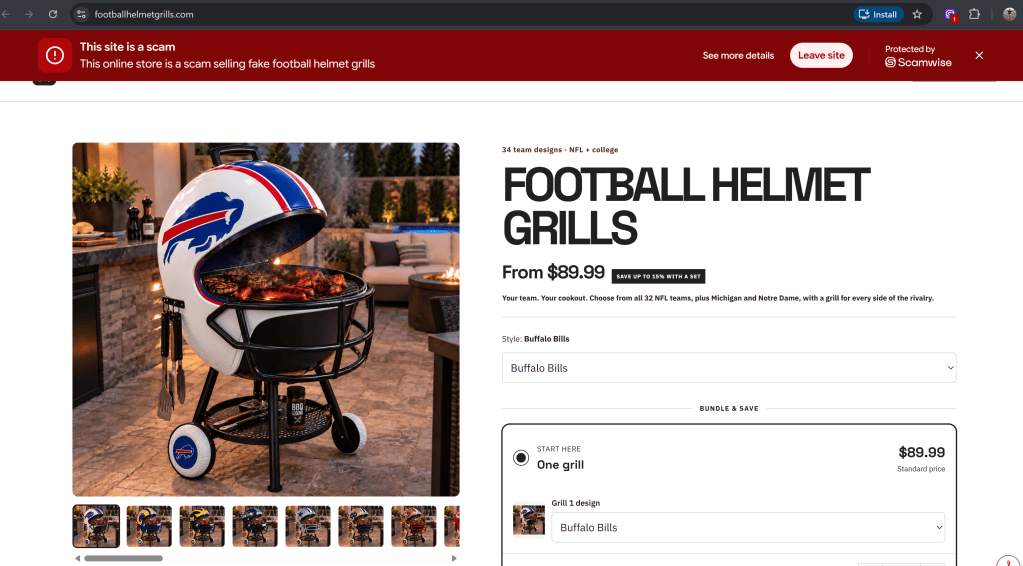
As an added bonus, Scamwise products are completely free. They also claim to be committed to keeping your personal information safe. This is especially important if you choose to allow Scamwise access to your texts, emails, and telephone calls.
Of course, as someone who has taught himself and others to be Internet wary, I urge you to check out their Privacy Policy before handing over anything you believe to be sensitive data. It is essential to always be aware of what you are sharing and how it might be used.
Lastly, no tool, no matter how good, is infallible. It’s essential that we don’t ignore our Spidey sense, even when using anti-scam software. If something feels fishy, there is a good chance it is.
Note: Despite being very impressed by what I have witnessed from Scamwise so far, please do not take this as an endorsement. I have not used it long enough to fully understand its capabilities or how it works. As with any software, it is essential that you do your own research and decide if it is right for you.
That said, after spending the weekend kicking the tires, I felt comfortable installing the Scamwise Chrome extension on my wife’s PC. Anything I can do today to prevent her from falling into a scam tomorrow will make my life a whole lot easier.
The Bottom Line
It’s a scary world and scams are becoming more sophisticated with each passing day. It is, however, possible to stay safe if we think before we click, be wary of too-good-to-be-true offers, and tighten our security belts. The scammers are only as successful as we allow them to be.
As a reminder:
- Don’t follow links in unexpected emails or text messages.
- Verify a retailer by navigating to its known website independently.
- Use a credit card rather than a debit card when shopping online.
- Be suspicious of prices that seem too good to be true.
- Use unique, strong passwords and multifactor authentication.
- Remember that HTTPS doesn’t mean a website is legitimate.
- Don’t assume that a polished website is legitimate. Scam sites can look just as professional as those operated by legitimate retailers.
There is a lot more I could say about the current state of scamming, but it’s time to draw this article to an end. Stay safe, my friends, and look out for each other.
Thank you for reading.

One false move to the left
one false move to the right
a single step or an ill-placed word
and a tenuous world comes crashing down
We are walking on thin ice
cautiously
carefully
ever sensing the danger that lies ahead and below


Leave a Reply