The only way to make sense out of change is to plunge into it, move with it, and join the dance.
Alan Watts
Every other Monday, my men’s retirement circle meets for connection, conversation, and friendship. It’s the most formal of all my groups, but the formality is still fairly loose. We begin with check-ins and after everyone has had a chance to speak, we move to a topic. I was responsible for last week’s topic and after a bit of thought, I posed the following:
Technology is advancing at a rate faster than we’ve ever experienced. Whether it’s our smartphones, computers, wallets, cameras, kitchen appliances, or cars, digital technology, — and now artificial intelligence — is everywhere and it’s impossible to know what’s coming next. This can be exciting, daunting, and scary.
Here are a few questions to ponder:
- Are you the kind of person who likes to stay current with the latest software and gadgets?
- What technologies have you adopted wholeheartedly and which do you shun?
- Do you miss the old ways of doing things?
- Who do you turn to when you can’t figure out the latest shiny thing?
- Are you worried about turning too much control over to machines?
- Where do you draw the line on AI?
Me, Myself, and I
As a retired guy who spent decades fully immersed in cutting-edge technologies, I cannot help but ponder the changes I have witnessed over my four-decade career. I went from writing assembly language to a world where software writes itself. There are days when it feels as if I started in the stone age and I am now boarding a starship to Alpha Centauri.
As good as I once was at my job, would the skills I brought into my career way back in 1983 be of use to anyone today? After seeing the amazing and complex work my data scientist son is doing with AI, MLOps, and data pipelines, I have to say, “probably not.” Blink and you go from whiz kid to dinosaur.
From Vacuum Tubes to Saturation Point
I introduced the topic to the group with this personal anecdote.
My dad was one of those kids who enlisted the day after the bombing of Pearl Harbor. Since he was still in high school at the time, the Navy allowed him to first graduate. However, immediately upon receiving his diploma, he was off to boot camp. After completion, he was assigned to the USS Dallas, a Clemson Class Destroyer where he served until the war was over.
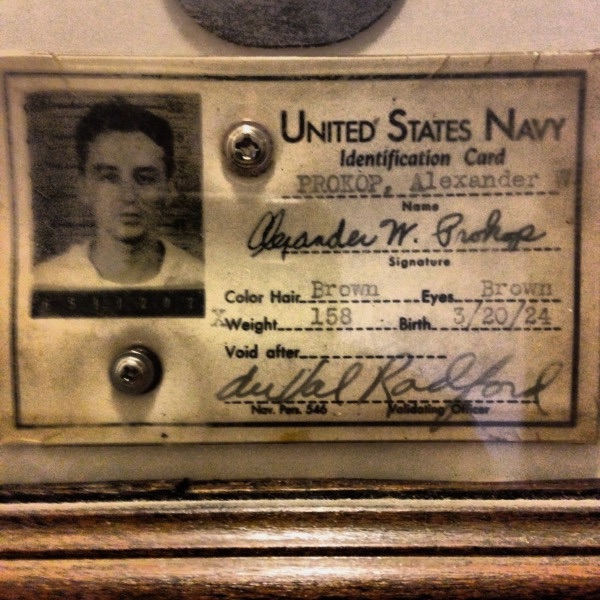
While he was a part-time gunner, his primary job was radio operator. Not only was he exceptional at sending and receiving Morse Code, he was responsible for keeping the radio gear up and running. There were no repair depots off the coast of Italy. This led Dad to a lifelong career in electronics.
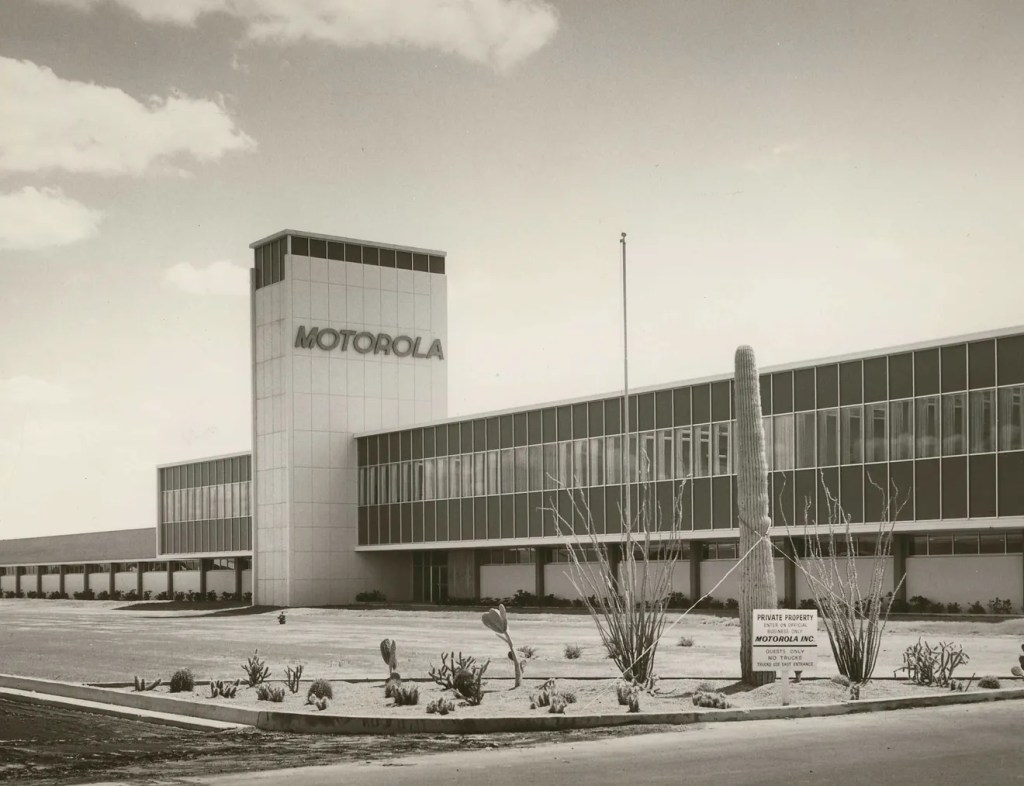
Fun fact. Dad’s longest job was at Motorola. Among his many accomplishments, he did a tremendous amount of work for the U.S. space program. From the late 1950s until he retired in the early 1980s, Dad worked on the Mercury, Gemini, and Apollo programs. He was extremely proud of his contributions to putting men on the moon.

Dad began his career with vacuum tubes, moved on to transistors, and followed that up with integrated circuits. He had plenty of personal failings, but that man knew electronics inside out. He could design or fix anything with a battery or power cord.
Sadly, that all came crashing down with the advent of embedded microprocessors. I was completing my computer science degree program at Arizona State University when Dad asked me to teach him assembler language. I said, “sure,” but we both quickly realized that this was beyond him. He understood transistors, capacitors, and resistors like the back of his hand, but he could not think in ones and zeros.
In the middle of one of our less-than-successful-sessions, he threw up his hands in frustration and said, “That’s it. I am retiring.” After nearly 50 years of being at the top of his game, he finally reached his saturation point. True to his word, he turned in his resignation shortly after our last lesson.
Five Themes
This experience has stayed with me and these days I ask myself, “What is my saturation point?” When will I throw up my hands and call it quits? What will that look like?
In order to help me process my journey, I wanted to hear the thoughts of my fellow retired men on how they are navigating and ultimately surviving modern technology. While some had a technical background similar to mine, most did not. However, like all people today, they haven’t escaped the onslaught of those ones and zeros. Digital technology is everywhere and we are expected to embrace QR Codes, Venmo, Password Managers, VPNs, Passkeys, and ChatGPT or be left behind.
A few themes arose from our discussion — nostalgia, acceptance, fear, balance, and curiosity. While not everyone experienced all five, it was common to feel at least two or three.
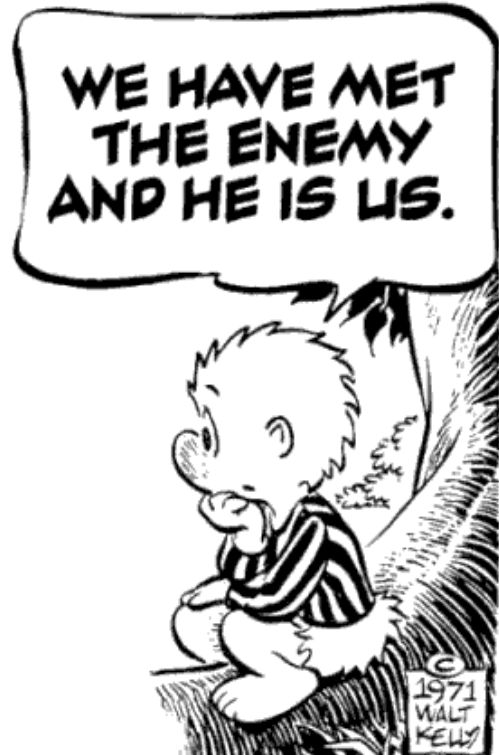
Personally, I am an all five guy. Even when I am at my most curious, there is an ever-present voice that whispers, “Danger, Will Robinson.” I enjoy feeling the warmth of the fire even as I fear burning my fingers.
The following are my brief recollections of how we addressed each theme.
Nostalgia
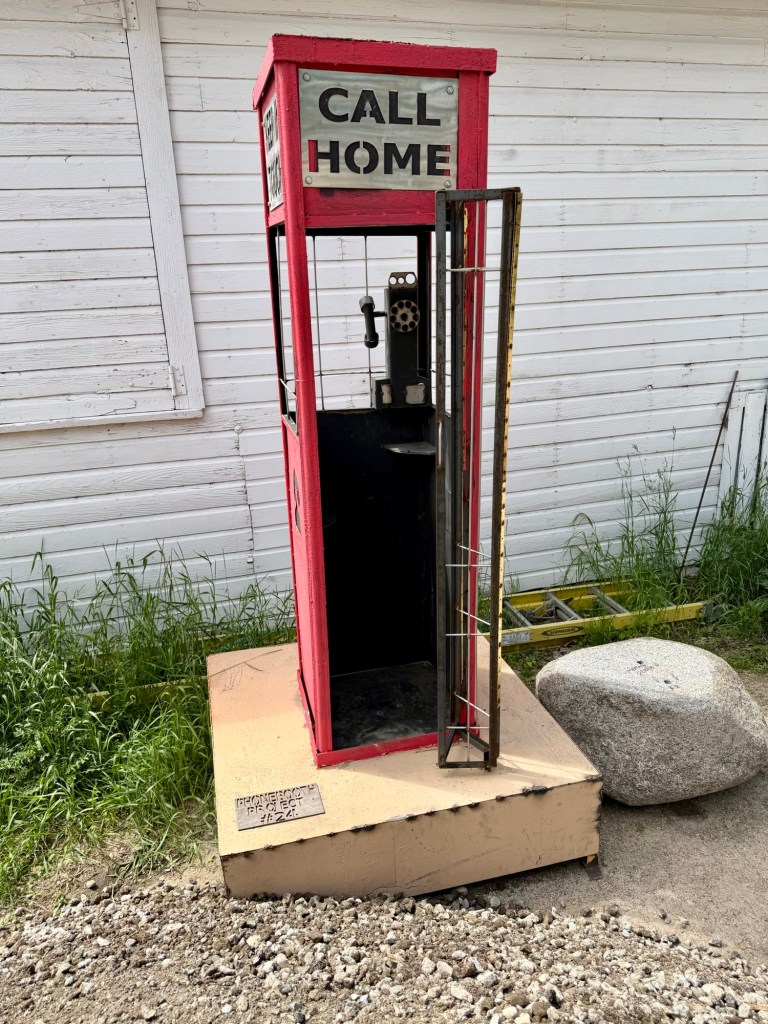
The average age of the men was somewhere around 70, so it’s not surprising that we have strong memories of a world that has ceased to exist. Whether it’s a rotary-dial telephone or a portable transistor radio, the analog devices we grew up with are no longer a part of modern life. Given that these long-gone technologies have strong associations with very important times in our lives, we attach greater significance to them than they might otherwise deserve.
While I choose not to pine for things long past their usefulness, I am fine with holding them close to the heart. Let the memories remain as those ancient technologies fade into the dustbin of history.
Curiosity
We may be older, but we aren’t ready to be put out to pasture. Everyone in the room was familiar with the common AI consumer tools and most had played with them. In fact, some folks, like me, use ChatGPT and AI search summaries on a near daily basis. We appreciate how much time they save us from wading through multiple web pages in search of answers to our questions.
Many of us are also comfortable using payment apps like Venmo, Apple Pay, PayPal, and Zelle. We trust that our transactions are safe and appreciate the convenience.
There were a few, though, that wanted nothing more from their computers and smartphones than email, text messaging, and telephone calls. Their curiosity lives outside the digital world and they limit their reliance on modern technology as much as possible. While I applaud them, that’s not me.
We keep moving forward, opening new doors, and doing new things, because we’re curious and curiosity keeps leading us down new paths. Walt Disney
Surprisingly, one of the most technology-adverse gentlemen admitted to having two smart speakers in his house. While there may be lines in the sand, they are easily crossed and manipulated.
Fear
Being afraid of modern technology isn’t limited to us retired guys. In the old days, we were told to be wary of strangers in dark alleys. The Internet has enabled criminals to attack us — as in every one of us — at any time from any place. We are only one click away from being scammed.
Although this wasn’t a fraud presentation, I did mention that a healthy amount of skepticism is required every time you open an email, receive a text message, or click on a link. Cybercrime is a multi-billion dollar business and technologies such as AI are enabling criminals to get exponentially better at creating hard-to-detect scams.
Additionally, several men expressed fear over how AI is being used to manipulate and deceive people. They worry about the upcoming elections and how AI will be used by nefarious politicians and billionaires.
My response to that is, “They will do whatever it takes to win and it’s up to us to be as prepared as possible.” That’s a big reason why I stay as up-to-date as I possibly can. The only way to know you are being deceived is to know what deception looks like.
Be afraid. Be very afraid. Geena Davis in The Fly

Balance
This one requires little explanation. No one was either fully in or fully out. We all seek a balance that works in harmony with our needs and values. Make note, it is possible to stay relevant without a TikTok account or an Instagram page.
The hardest part of new technology is avoiding the frustration of perpetual change. Buttons will move and menu items will disappear. Annoying pop-ups will irritate you to no end. It will become increasingly more difficult to distinguish reality from scam. The steps you used yesterday will no longer get you where you want to go today.
The trick is to know that from the outset. Find ways to stay as engaged as you want to be without driving yourself crazy. This requires patience, the willingness to continually fall out of your comfort zone, and the humility to ask for help. I do all three to keep my digital life humming along.
Acceptance
In the end, no one believed we would ever return to a pre-Internet world. Smartphones will evolve into something even more addictive. AI will become part of nearly every aspect of our lives. Our children and grandchildren will master a world we are incapable of understanding. That’s simply the nature of the beast.
In short, we accept who we are and that the world is moving faster than we can keep up. The best we can do is hold on and stay curious for as long as possible. It will come to the point where we only need to know just enough to stay in the game. We may not accept everything thrown our way, but we choose to stay engaged.
No intelligent idea can gain general acceptance unless some stupidity is mixed in with it. Fernando Pessoa
The Digital Dance
I don’t know if my saturation point is inevitable, but there are days when it sure seems like it’s just around the corner. As much as I try to stay current, the world is moving so much faster than I am used to. I think I understand a new concept and before I have time to pat myself on the back, it evolves into something very different. More than anything else, that is what drove my dad to an early retirement. There were no more pats on the back coming his way and he knew it.
As a longtime computer professional, change has always been part of the job. What’s new is the speed. I could handle six months. These days it feels more like six minutes.
So, where will I break? Will it be the next generation smartphone? Will AI reach the point where I find it completely unacceptable? Will my family turn to my grandchildren for technical help rather than me? I’m not ready for that last one and it’s coming quicker than I care to admit.
These are the unanswerable questions my fellow retired men and I are asking ourselves. My father eventually found his jumping off point. I hope mine is still a long way off. Until then, I intend to keep learning, keep asking questions, and keep dancing with the changes, even if I occasionally step on my own feet.
My goal, and the goal of most of the men in my retirement group, is to remain curious for as long as possible. If we can manage that, perhaps our saturation points will wait a little longer.
Are you willing to dance along with us?
Thank you for reading.
Is it better
is it more
does it fill the spaces that cry out for attention
does it bring light to a darkened room
is it a hand that keeps you from falling
To be the last one standing
battered
exhausted and worn
watching your world pack up its toys
and drive off towards a brighter sun


Leave a Reply