You can’t make positive choices for the rest of your life without an environment that makes those choices easy, natural, and enjoyable.
Deepak Chopra
As a child, I loved going grocery shopping with Mom. I would like to think she appreciated my help, but for her it may simply have been a chance to spend some one-on-one time with me. With six children and a demanding husband, it was rare when Mom wasn’t surrounded by a mob of needy people.
Unlike Dad, Mom was a patient teacher and I quickly learned how she liked to shop. What are the necessary aisles? What sections do we avoid? How much ground beef do you need for both a meatloaf and hamburger night?
Most of all, I learned that Mom was a stickler for saving money. Whether it was using coupons, stocking up on sale items, or forgoing name brands for store generics, cost was her primary driving factor. A penny here and a penny there made all the difference when we finally hit the register.
I am not my mother. While I appreciate a sale price as much as the next person, I am far more concerned about issues well beyond money. For me, grocery shopping now involves a different set of questions:
- How does the store treat its employees?
- How does the store support the community?
- Is there an effort to source and sell local goods?
- Is there a wide variety of organic foods?
- Is the staff helpful and friendly?
- How much of the produce comes from small farmers?
- Does the store prioritize certified fair-trade products?
- Where does my money go?
This leads me to do nearly all my shopping at locally owned, small businesses. In the case of food items, I have been shopping at co-ops since my college years. Back in the day, I was a regular volunteer at several co-ops and did everything from bagging raisins to stocking shelves. I was very sad when those programs disappeared and will be the first in line to sign up for shifts if they return.
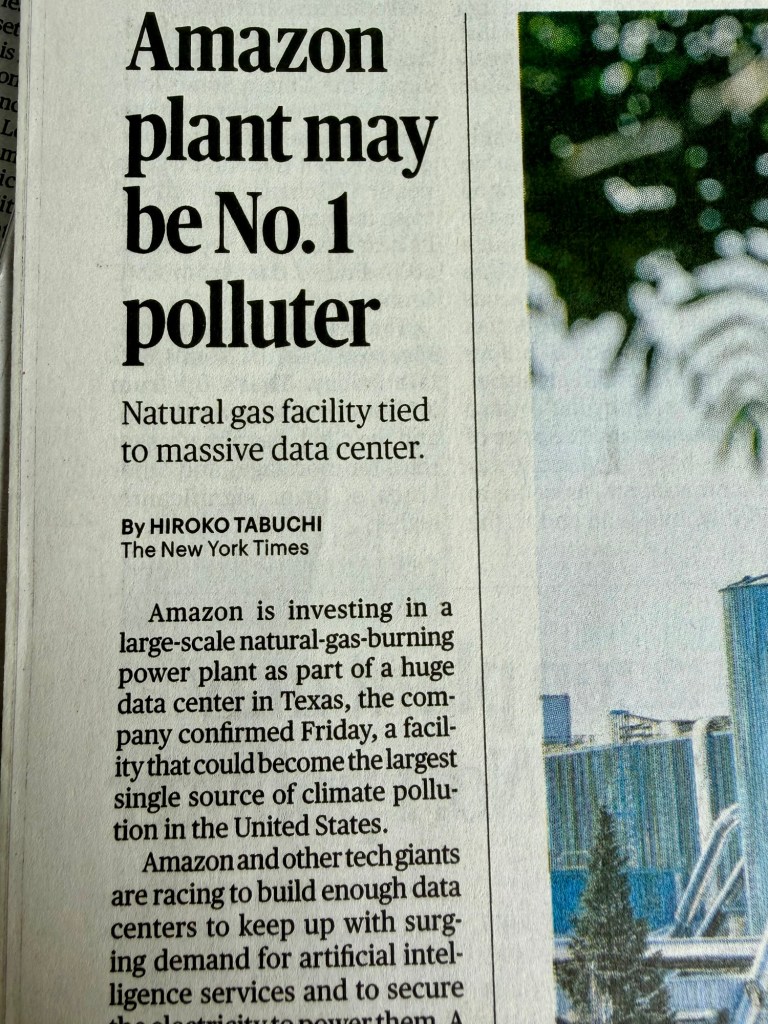
While there are times when I must buy from an online business, I am very choosy about how often that is. I avoid Amazon and similar big corporate outlets and reserve my UPS and FedEx deliveries to items I cannot easily get from a store within walking distance or a short drive. This sometimes complicates my life, but my values are not defined by convenience.
Shopping With Purpose
I am not alone in my desire to put my money where my convictions lie. Beyond the small, local establishments, there is a growing list of much larger companies that allow consumers to align their personal beliefs with their wish to purchase quality products at a fair price. Whether it’s ice cream from Ben and Jerry’s or shoes from Zappos, customers are handing their money over to companies that demonstrably support everything from renewable energy to peace and justice initiatives. These people expect action and not empty slogans.
Also, as a progressive voter, I will not willingly give my money to corporations that support candidates and policies I find abhorrent. Does this keep me from shopping at Minnesota-based Target after learning of their about-face on DEI initiatives? You betcha!
A Chance Encounter
On a recent morning bike ride, I did my usual pause at Minnehaha Falls. Unlike previous stops where I simply take in the Falls, drink a few gulps of water, and then resume pedaling, I noticed two people conducting what looked like video interviews. Curiosity got the best of me and during a lull, I wandered over and asked what they were doing.
Those two people were Maya and William from WannaHug and they were promoting their company by asking folks three questions:
- Who is the best hugger in your life?
- How did they make you feel in that moment?
- When was the last time you did something kind for a stranger, or a stranger did something kind for you?
My answers came quickly. Best hugger? My youngest son, James. How do I feel? Connected. My last act of kindness? I don’t always live up to my expectations, but it is my goal to be understanding, curious, and kind with everyone I meet.

After answering the questions, William, the founder, and I got to talking and he explained that WannaHug is an online, values-based clothing company. He and Maya have been traveling around the Twin Cities as a way to build brand recognition, connect with people, and have a little fun. No one leaves without an offer of a hug which I gladly accepted.
The business model of WannaHug is simple. For every item you purchase, they donate socks, woolen hats, and towels to shelters and organizations serving unhoused people.
Why those items? According to WannaHug, they are among the most needed and desired items by unhoused people. Not only do they serve a practical purpose, they provide comfort and a sense of caring to a very vulnerable population. Socks provide the comfort, a clean towel offers dignity, and who doesn’t need a warm hat on a cold winter night?
We believe kindness should be confident, effortless, and part of everyday life. What started as one person’s journey toward healing became a mission to bridge resilience and empowerment. From WannaHug’s Vision Statement
Six Questions
Before riding off, William and I exchanged contact information and have been actively corresponding over the last week. Among the many things we discussed, I asked him a few questions about WannaHug. Here are his lightly edited answers.
What enticed you to create WannaHug?
While living in Seattle, I saw an incredible amount of wealth alongside incredible need. That divide felt unnatural. I wanted to create a business that made helping others effortless—where doing good wasn’t an extra task or expense, but simply part of the purchase.
How does your business differ from what other socially-minded companies are doing? For instance, Bombas.
Most purpose-driven brands decide how your purchase creates impact. We let our customers decide. Instead of donating on someone’s behalf, we offer tangible products they can choose to donate themselves. That turns giving from an automatic transaction into a personal decision.
Where do you see the company in the next five years?
In five years, I hope WannaHug becomes the standard for integrating social impact into everyday business. Clothing is where we start, but the larger vision is WannaHelp — a platform that helps entrepreneurs and small businesses build community impact directly into their operations.
How have your products been received by the marketplace?
Customers consistently tell us they love both the quality and the mission behind our products. We intentionally source recycled and eco-friendly materials from carbon-conscious manufacturers; some facilities even use rainwater during production. People appreciate knowing they can wear something that’s thoughtfully made while also supporting their community.
Besides donating clothing, I see you are promoting fair exchange and organic clothing? How is that being received by your customers?
Very well. We’ve found that consumers genuinely care about how products are made. When they learn their purchase supports ethical manufacturing, environmentally responsible materials, and community impact all at once, it reinforces that they’re buying something aligned with their values.
What do you hope people feel after interacting with WannaHug?
It’s been my experience that people are inherently good. WannaHug is simply a vehicle that helps carry that goodness into the world. It creates moments where people can quiet the noise of everyday life, reconnect with one another, and realize how much meaningful change is possible through small acts of kindness.
Unpacking
There is a lot to unpack here, but two things stand out.
First, with WannaHelp, William is looking beyond a simple storefront and envisions a platform for other values-driven entrepreneurs. I am excited to see an expansion beyond clothing while still maintaining the framework of ethical shopping.
Second, I love how WannaHug allows consumers to direct their donations. This creates a stronger, more human connection between the consumer and the recipient. It’s not the company making the donation. It’s the buyer.
From Consumption to Compassion
With the near constant onslaught of bad and disturbing news, it would be easy to become depressed and despondent. Whether it’s war in the Middle East or the relentless attacks on the country’s most vulnerable residents, we are inundated with reasons to check out.
At the same time, there are always glimmers of hope breaking through the darkness. Coming across William and his vision for a new form of consumption brightened my day. We, the people, can make a difference. We can redefine capitalism to become less about money and more about inclusion and care. Even my penny-pinching mom would agree with that.
Thank you for reading.
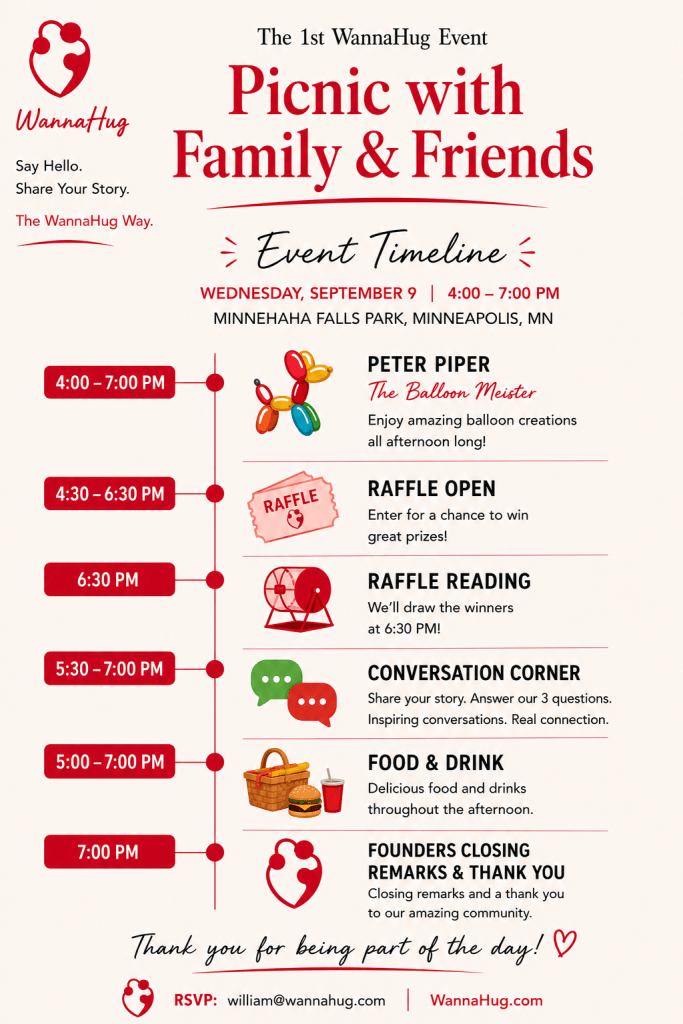
P.S. If you live in the Twin Cities and would like to learn more about WannaHug, please come to their September 9th picnic at Minnehaha Falls. Not only will you meet William and have a shot at answering those three questions, I might even bike over for food and balloons.
In form and function
in body and mind
the metamorphosis of two into one,
of soulmate from stranger
In a world of weakness and blemish
where value is placed on the vacuous and phony
perfection is found
when two flawed people come together to form the perfect blend
of inspiration and idea
desire and need
Perfection is found
in the merging and connection
in the unification of us

 Can You Hear Me Now
Leave a comment