Find joy in everything you choose to do. Every job, relationship, home… it’s your responsibility to love it, or change it.
Chuck Palahniuk
I have secret pleasure. I adore 1950s and 1960s live-action Disney movies. I suspect that much of that has to do with my childhood. I have very powerful memories of piling into the family 1958 Chevy Brookwood station wagon and heading out to the Round-Up drive-in theater to see the likes of The Misadventures of Merlin Jones, That Darn Cat, and Follow Me, Boys. Disney’s animated films were okay, but I preferred seeing real people live out Walt’s fantasy of American life.
Sadly, Disney seems to have walked away from many of its classic mid century films. While their streaming service, Disney+, occasionally gifts the world with the likes of Blackbeard’s Ghost and Third Man on the Mountain, far too many gems are nearly impossible to find. I would love another chance to enjoy Summer Magic, The Gnome-Mobile, and the previously mentioned Follow Me, Boys, but they never seem to make the rotation. I am grateful for what they give us, but it’s only a fraction of what is stored in the vaults.
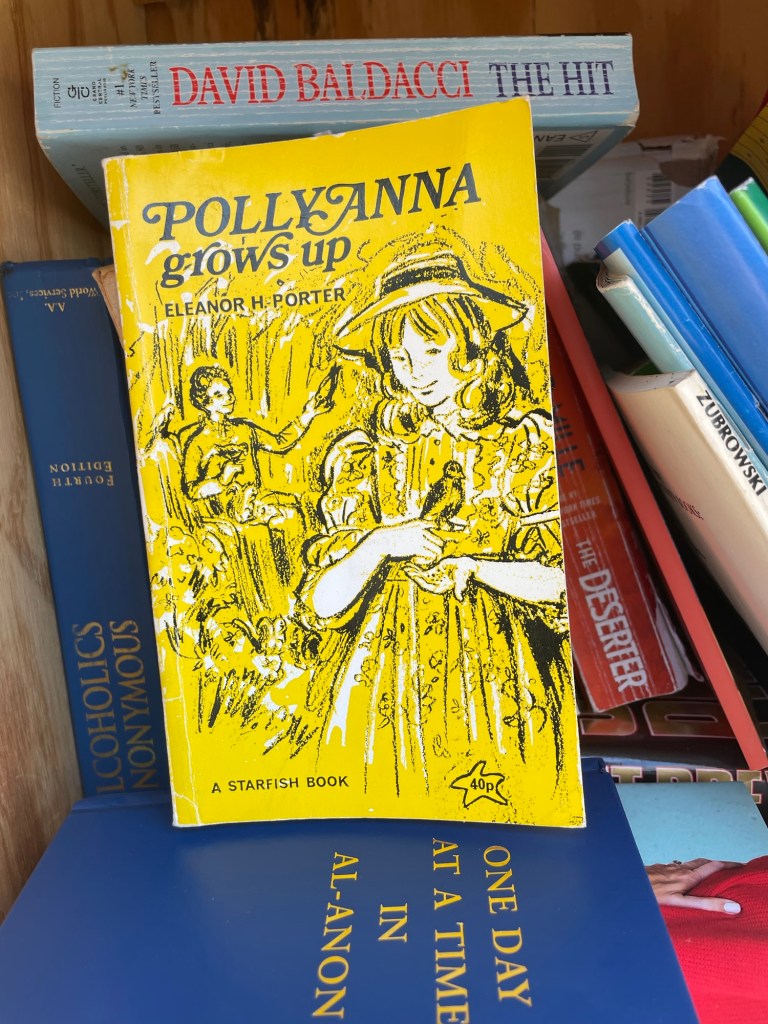
This past week I took a trip back to 1960 and watched Pollyanna for the first time in many decades. I am not exactly sure why it took me so long to take another look, but I suspect that a lot of the wait had to do with thinking the film was too corny even for my very relaxed tastes. I was very comfortable with silly films like The Monkey’s Uncle while believing that Pollyanna was somehow below me.
I could not have been more mistaken. Yes, the film can be saccharine sweet in its depiction of the turn-of-the-century small town of Harrington, Vermont. There are no people of color and it manages to make poverty appear quaint. Technicolor and the film’s cinematography makes everything look otherworldly bright, beautiful, and pristine. Harrington was a town that never truly existed.
Despite all that, Pollyanna Whittier, an eleven-year-old orphan who goes to live with her wealthy aunt Polly, has a sensibility and strength that far surpasses her age and the film’s setting. Even with her frilly dresses and “Glad Game” optimism, Pollyanna’s attitude is progressive, enlightened, and downright radical.
Although the word feminist was not in the 1960s Disney vocabulary, that’s exactly what Pollyanna was. She was comfortable breaking the subservient little girl mold in both words and deeds. She climbed tall trees in those frilly dresses and stood her ground while the boys ran away. She spoke truth to power and didn’t shy away from uncomfortable situations or ungrateful people.
The story is quite simple. Pollyanna’s Aunt Polly is an emotionally stunted wealthy woman who rules Harrington with an iron fist. She controls the town’s politics, people, commerce, and church. Folks are fearful of crossing Miss Polly and refuse to speak out even when they know she is dreadfully wrong. Polly is a lonely, bitter, unhappy woman, yet she is too stubborn to break free from self imposed prison — a prison paid for with her wealth and position.
Pollyanna loves her aunt, but refuses to fall into her morose ways. Unlike Aunt Polly, Pollyanna sees the good in the town and its people and pushes them to rise above their fears. She teaches frightened adults to listen to their braver angels.
Fun fact. The character of Pollyanna was played by British child actor, Halley Mills. This was Ms. Mills first American film role and she managed to snag an Academy Award for it. In order to protect young Halley from the traps of stardom, her parents did not allow her to attend the awards ceremony and wasn’t aware that she won until the next day. In later life, Halley expressed disappointment over missing what would have been a very special moment in her life. To make matters worse, her only Oscar was stolen from her home several years later.
We Find What We Seek
One of the most poignant scenes in the movie involves Pollyanna’s meeting with the fire-and-brimstone preacher, Reverend Paul Ford. Pollyanna’s deceased father was also a minister and she tells of an Abraham Lincoln quote that saved him during a very difficult time in his ministry.
Whether you look for the good or the bad in a person, you will find it.
Who among us cannot relate to that? If we look for darkness, darkness is what we will find. If we look for light, we see light shining all around us. Better yet, we see light shining from within us.
The quote forces Reverend Ford to take a hard look at his own ministry and the message he has been delivering to his congregation. Instead of helping them appreciate the glory of the world around them, he pushed fear and eternal damnation down their throats. His sermons offered neither joy nor the hope for a better life. He taught them that the world was a terrible place and people were nothing more than doomed sinners.
He looked for the bad and that’s all he was able to see.
The following Sunday, he defied Aunt Polly’s request for another dour sermon and rather than shouting his typical hellish rants, he told the congregation to go out and enjoy the beautiful day. He then stepped down from the pulpit to stand among the people as an equal. In that moment, he showed how even those most entrenched in darkness can wake up to the light of a new day.
Open wide the windows on this brisk spring morning
throw back the blankets and sheets
letting the cold air coax and caress you
To be and to know the essence of your being
to grow into the day
one miracle at a time
From Then to Now
Anyone who has been following my blog knows of how I feel about the current American administration. We are being led by heartless people who are working furiously to dismantle more than 250 years of progress towards a more perfect union. They are telling us to fear and sometimes hate our neighbors, value money above care and compassion, abandon our friends, and submit to the will of white, evangelical Christian men. They claim to be our protectors while stripping away our hard fought freedoms and human rights.
The president is like Aunt Polly. He feels no joy for anything other than his power and wealth. Have you ever seen him laugh? Not laugh at someone’s misfortune. Have you ever seen him laugh as a celebration of being alive — full-throated and unscripted? I have not. He snarls, scowls, blames, taunts, brags, and threatens, but he never laughs. There is something terribly wrong with that.
Whether Walt planned it or not, the radical message of Pollyanna is to stand up to the powerful. Young Pollyanna does so with bravery and her childlike innocence. She points the finger of truth at people who refuse to recognize the lies they have so willingly embraced. She playfully laughs and smiles in the face of those who have yet to learn to embrace kindness and gratitude. She loves the people that refuse to allow love to be a part of their lives. She knows when something isn’t right and is not afraid to speak out against it.
Most importantly, she doesn’t give up and that’s exactly the stance we need to take if we are willing to stop the hateful madness of our current president. We need to be strong, angry, and joyful as we stand up to power. Things are bad, but we can be glad that we are not alone in our fight for change.
We have a lot of work ahead of us and very little of it will be easy. Are you prepared to find your inner Pollyanna? I am certain she is ready to come out and help with the fight. We can be glad of that, too.
Thank you for reading.
She will not be named
by the spiteful or the angry
she will not be silenced
for her voice is courage and strength
resolution and love
she will not be defined by the cowards and the fools
who let life slip from their grasp
like handfuls of sand or water down the drain
she will not lie down until her chosen tasks are finished
and her legacy firmly fixed
She will not be named for her name is surely written
friend, companion, partner
healer, mother, fighter, lover
woman

 Can You Hear Me Now
Leave a comment