
This is love: to fly toward a secret sky, to cause a hundred veils to fall each moment. First to let go of life. Finally, to take a step without feet.
Rumi
The original 12-Step program was developed in the 1930s as a way for alcoholics to stay sober. The steps begin by recognizing an alcoholic’s inability to find sobriety on his or her own and ends with sharing the gifts of sobriety with others who continue to struggle. It is a spiritual program that recognizes that humans need a higher power to help free them from the prison of addiction. However, it is not a religious program. There is no need to believe in a god or prescribe to any particular religion. The addict requires a higher power to successfully complete the steps, but that higher power can be anything he or she wants it to be as long as it isn’t the addict.
Over the years, 12-Step programs have been created for illnesses and conditions well beyond alcoholism. There are 12-Step programs for compulsive gambling, overeating, sex, racism, narcotics, hoarding, and workaholism to name just a few. There are even 12-Step programs for people in relationships with addicts.
Every step is challenging, but few are as involved as the Fourth Step. The Fourth Step reads: Made a searching and fearless moral inventory of ourselves. To successfully complete the Fourth Step, one must dig deep into their upbringing, resentments, wrongs they have done, character traits, patterns, habits, and mistaken beliefs. In addition to the darker aspects, the Fourth Step also asks for a list of one’s positive attributes. The purpose is to create a complete accounting that addresses all aspects of a person’s personality. This requires a comprehensive look at both the good and the not so good traits. None of us is ever just one thing.
While the goal is to help the addict find sobriety, it’s not uncommon for the inventory to go well beyond the named addiction. The addict may be lost in alcohol, gambling, sex, or food, but the reasons they are stuck often have nothing to do with any of those things. For instance, an overeater’s addiction may be fueled by a lack of self-worth and an alcoholic’s addiction might thrive on the addict’s desire to numb sexual abuses they endured as a child. A good Fourth Step will uncover the reasons why a person turned to their drug(s) of choice and once those reasons are known, subsequent steps offer a path to deal with them.
Beyond Addiction
The 12-Steps were developed by people attempting to escape the prison of of addiction, but there is no reason why they cannot be applied to anyone seeking a better life. Is there a good reason why everyone should not add “Continued to take a personal inventory and when we were wrong promptly admitted it” (Step 10), or “Made a list of all people we had harmed and became willing to make amends to them all” (Step 8) to their lives? Imagine how much better our relationships would be if we owned up to our mistakes and made an effort to correct our wrongdoings.
Fun fact: While not coming out and saying it, My Name is Earl was basically a mid-2000s sitcom about Step 8 and Step 9 (Made direct amends to such people whenever possible, except when to do so would injure them or others). In an attempt to reverse his back luck, Earl Hickey, a small time crook, attempts to make make up for all the bad things he has done over his life. Most episodes in the first season began with these words:
“You know the kind of guy who does nothing but bad things and then wonders why his life sucks? Well, that was me. Every time something good happened to me, something bad was always waiting around the corner: karma. That’s when I realized that I had to change. So, I made a list of everything bad I’ve ever done, and one by one I’m gonna make up for all my mistakes. I’m just trying to be a better person. My name is Earl.”
This takes me back to the Fourth Step. Every human who has ever lived has some form of brokenness. The brokenness can come from a number of different places. You may have had a traumatic childhood. You may have been exposed to inappropriate activities (drugs, pornography, alcohol, etc.) far too early in life. You may be suffering from PTSD. You may have grown up in a family of addicts and don’t know any other way. The list is endless and if these sources of brokenness are not addressed, they often lead us to some seriously dark places.
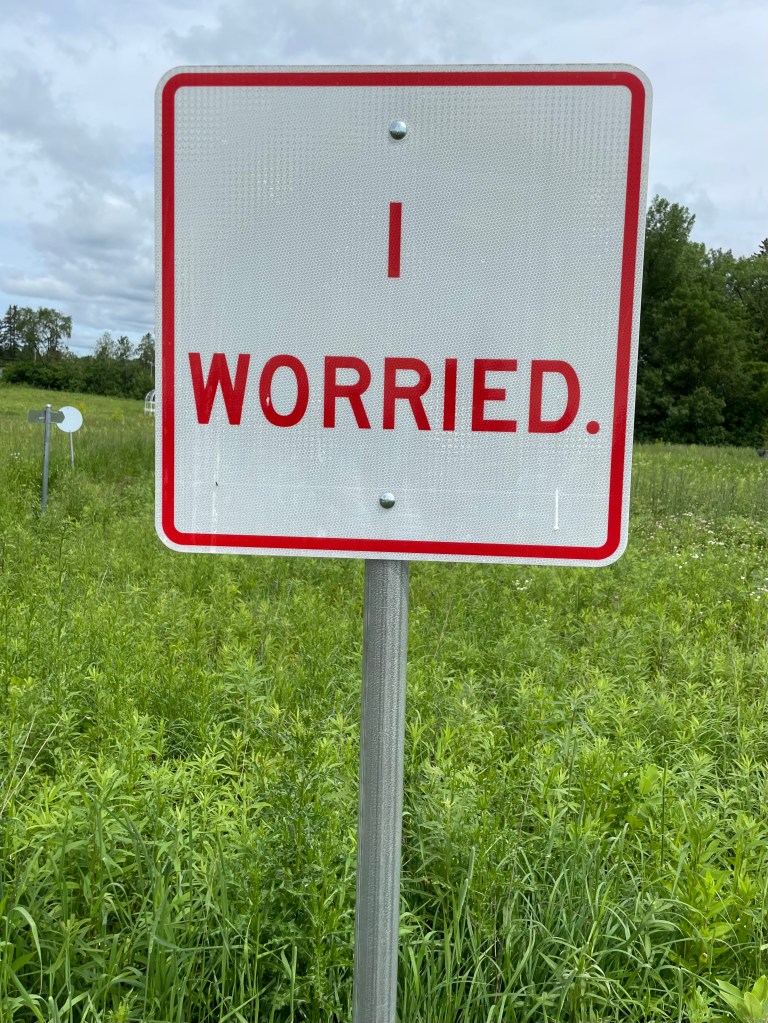
I, Me, Mine
I am not ashamed to admit that I did my own Fourth Step. Learning who I am and how I got there was life altering. Seeing a composite picture of Andrew allowed me to see how my character flaws and strengths define my daily actions. It put into words abstract behaviors and gave me the opportunity to do something about them. To name something is the first step (pardon the pun) towards changing it. In other words, you can’t fix it if you can’t see it.
There is no definitive way of doing a Fourth Step. Some seek out Fourth Step workshops and work together as a group. Others find online resources that guide them through the process. If you are an active member of a 12-Step program, you will work with a sponsor who has already gone through his or her own inventory.
No matter what path you choose, the goal is to be fearless and spend a good deal of time thinking, questioning, brutal honesty, and writing. This is not something you do in your head. The end product will be many pages of tangible results.
No matter your approach, I highly recommend that your personal inventory contains all of the following.
- A personal history. Thoroughly examine and describe your life — the good and the bad. As a child, were you loved, unwanted, abused, or abandoned? How did your parents influence you? What traumatic events did you endure? What events did you rise above?
- A list of resentments. What are you carrying around that you can’t let go of? What is your part in the resentment? Are there patterns? Are your resentments the same as your jealousies?
- Fears. What are you afraid of? Are you afraid of growing old, dying, humiliation, love, failure, being alone, etc. How do your fears influence your actions?
- What are your negative character traits? Are you angry, secretive, stubborn, selfish, lazy, a braggart, etc.? Do you isolate yourself? Do you find fault in everyone and everything? Do you hold grudges? Are you a worst-case kind of person?
- What are your positive character traits? Are you helpful, kind, loving, honest, hardworking, inclusive, forgiving, etc. What make you feel worthy? Are you a good parent, friend, coworker, brother, sister, etc.?
- Harms done. How have you hurt people? Make sure you include yourself. How did that make you feel? What are the triggers that cause you to act out?
Your inventory will take a long time, but don’t allow it to go on forever. Find a reasonable place to stop. This will become a living document that you return to time and again in order to evaluate and measure progress — forward and back. Don’t feel bad if six months down the line you add a new character flaw. That often means that you are digging deeper and acknowledging something that has probably been there for a long, long time. Rejoice when you add something new to the positive trait column. That’s called growth. The goal is to use your inventory as a roadmap to becoming a better person.

Next Steps
Anyone in a 12-Step program knows, this isn’t the end of the journey. Once you’ve completed your inventory, it’s time to work on doing something about it. That’s what the remaining eight steps are for.
For now, it’s enough to know that creating your own inventory will change your life. I guarantee that you will be a better person after completing yours. It doesn’t matter in the least how healthy and sane you think you are now. We all need serious self evaluation from time to time. It’s how we get out of our ruts and move forward into the light.
Thanks for reading.
Rocks large and small
carelessly chosen
one by one, year after year
each with the weight of intimidation and self-loathing
insecurity, failure, and doubt
from pebbles to stones to boulders
to the collected burden of a mountain slung across your back
Unproductive coughs
serving no useful purpose
let them go

 Can You Hear Me Now
Leave a comment